
Guides
Stone, brick and pavers
The natural stone, brick and pavers we work with, and where each works best.
The stone you choose sets the mood of the whole space. A warm travertine feels Mediterranean and relaxed. A cool bluestone feels crisp and modern. What goes between the stones matters just as much, whether it’s a neat mortar joint, fine gravel or a soft carpet of ground cover.
Here’s a guide to the materials we work with, and what each one suits. Not sure where to start? Henry can bring samples to your site visit.
The stones
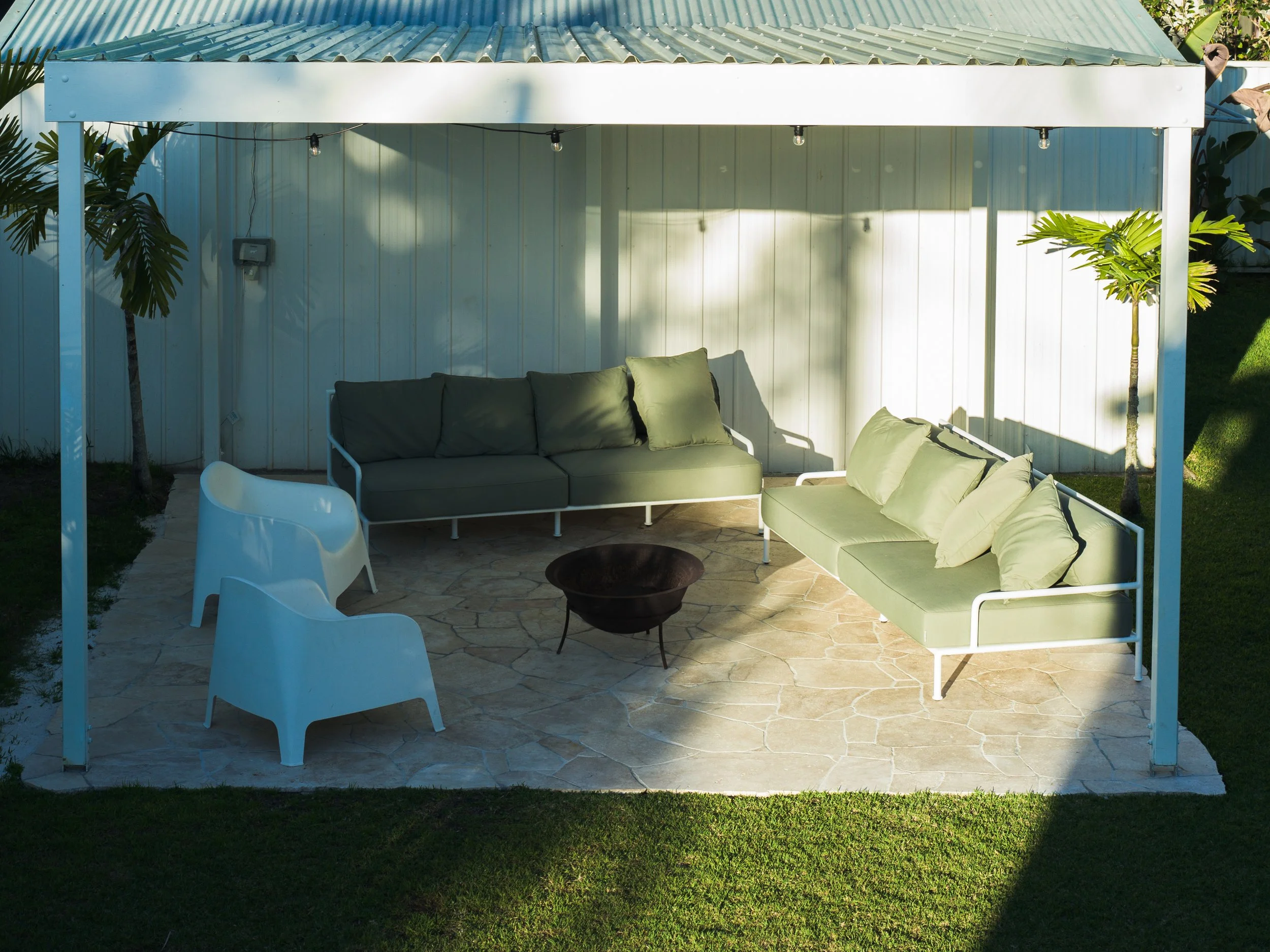
Travertine
A natural limestone in warm creams, beiges and soft golds, with small natural pits and veins that give it character. Its light colour stays comfortable underfoot in summer, which makes it a favourite for pool surrounds and courtyards.
Best for:pool surrounds, courtyards, Mediterranean and coastal styles.
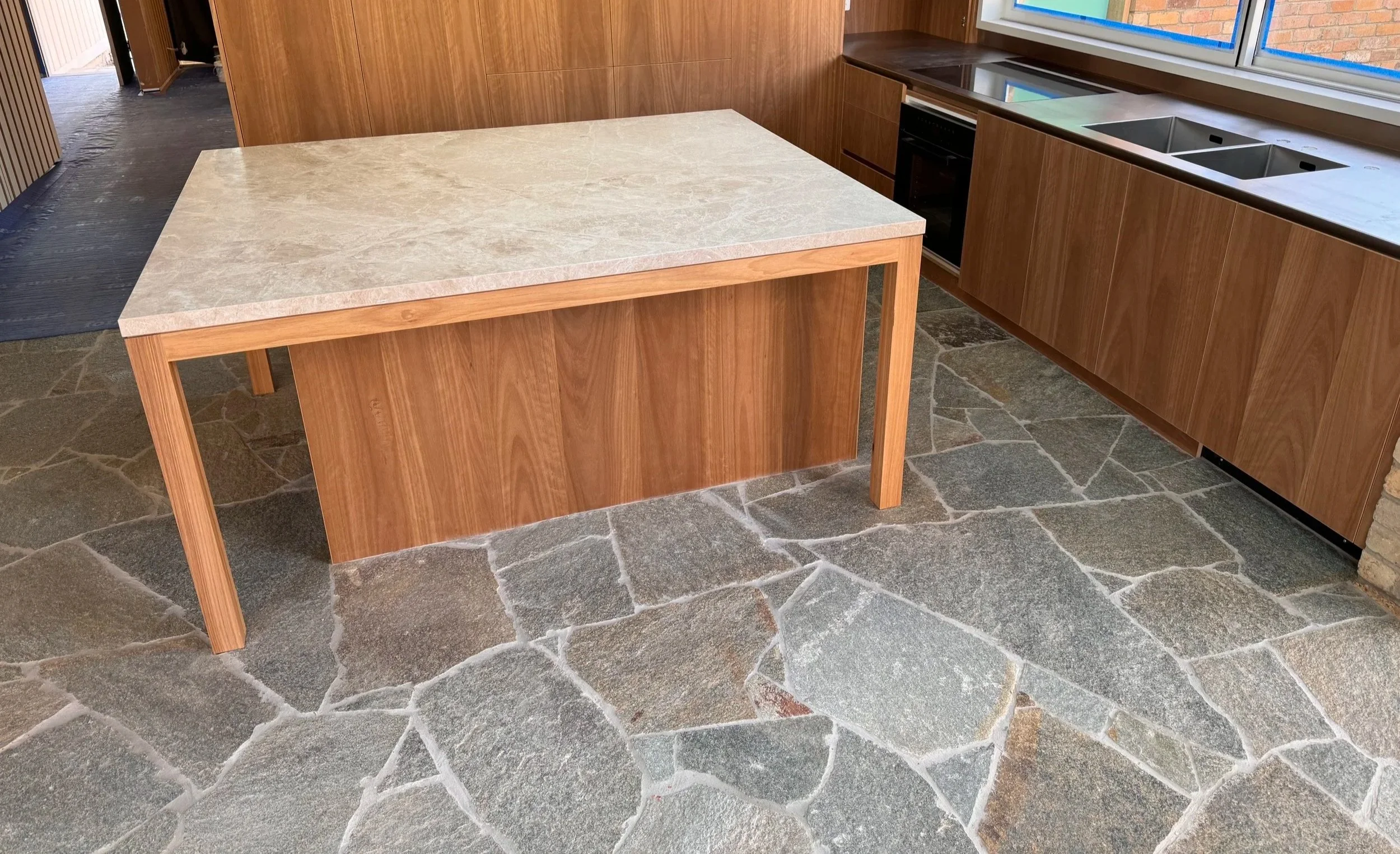
Sandstone
Golden, honey and buff tones that feel instantly at home in an Australian garden. It has a soft, natural texture and weathers gently over time. Sandstone is fairly porous, so sealing is especially important to keep out stains and moisture.
Best for:garden paths, terraces, relaxed bush and coastal gardens.
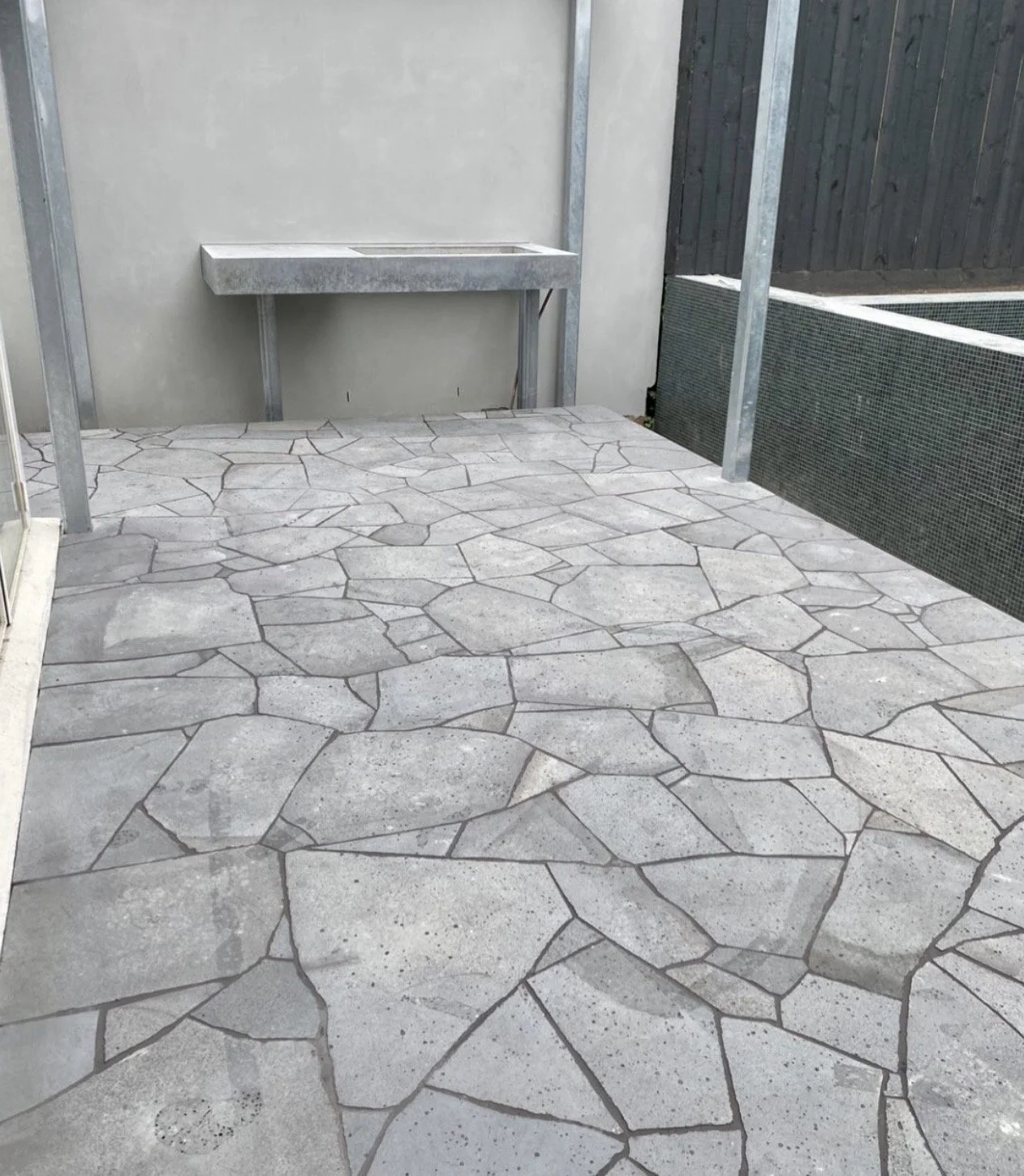
Bluestone
A dense volcanic stone in cool blue-greys. It’s hard-wearing and looks crisp and contemporary, especially next to timber and white render. Darker stone warms up in full sun, so we’ll talk through placement if it’s going around a pool.
Best for:entries, terraces, modern homes.
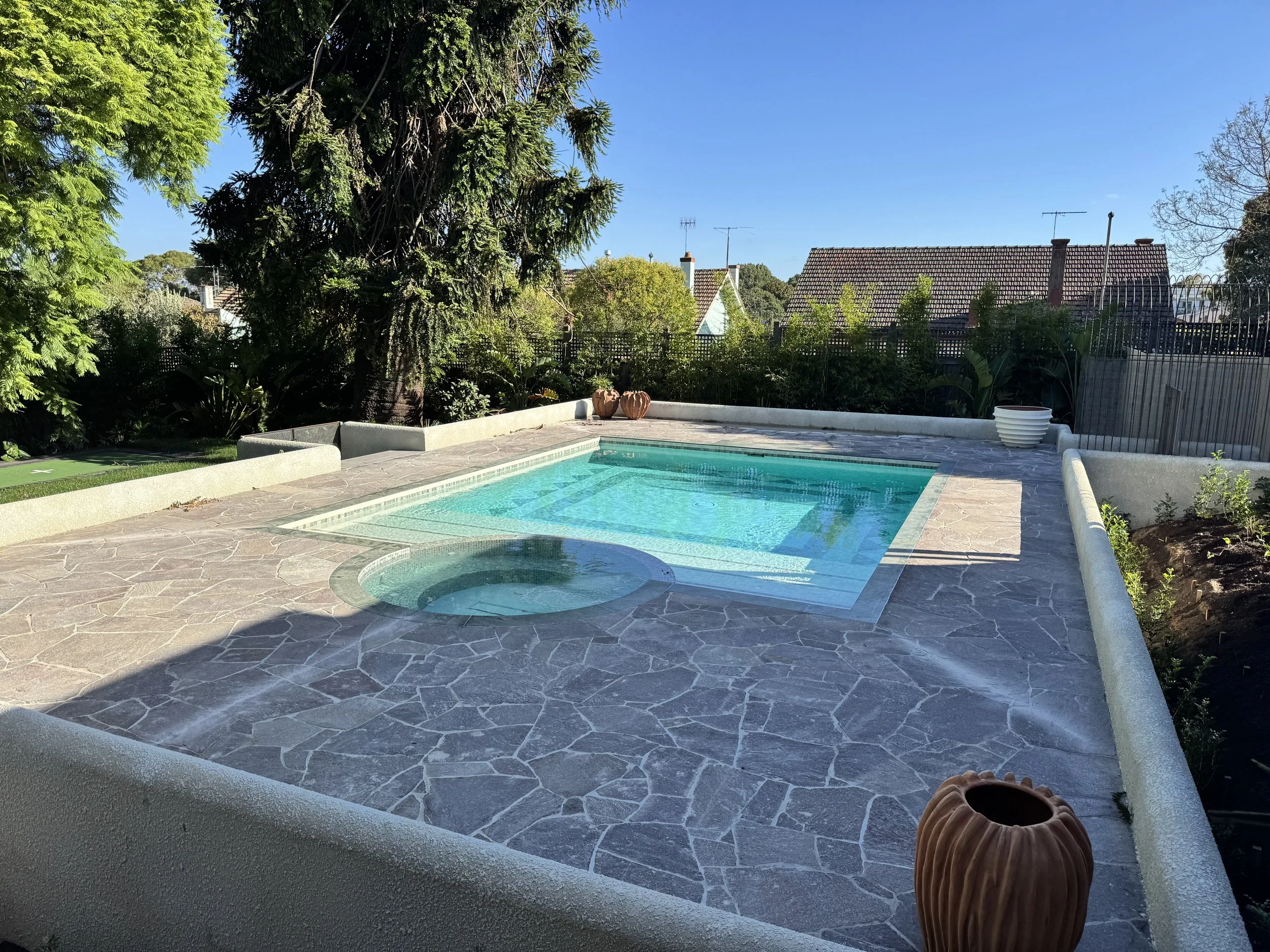
Porphyry
A very hard volcanic stone in rich reds, browns, purples and greys, used for centuries in European streets and piazzas. It’s one of the toughest paving stones around.
Best for:high-traffic paths, entries and old-world character.
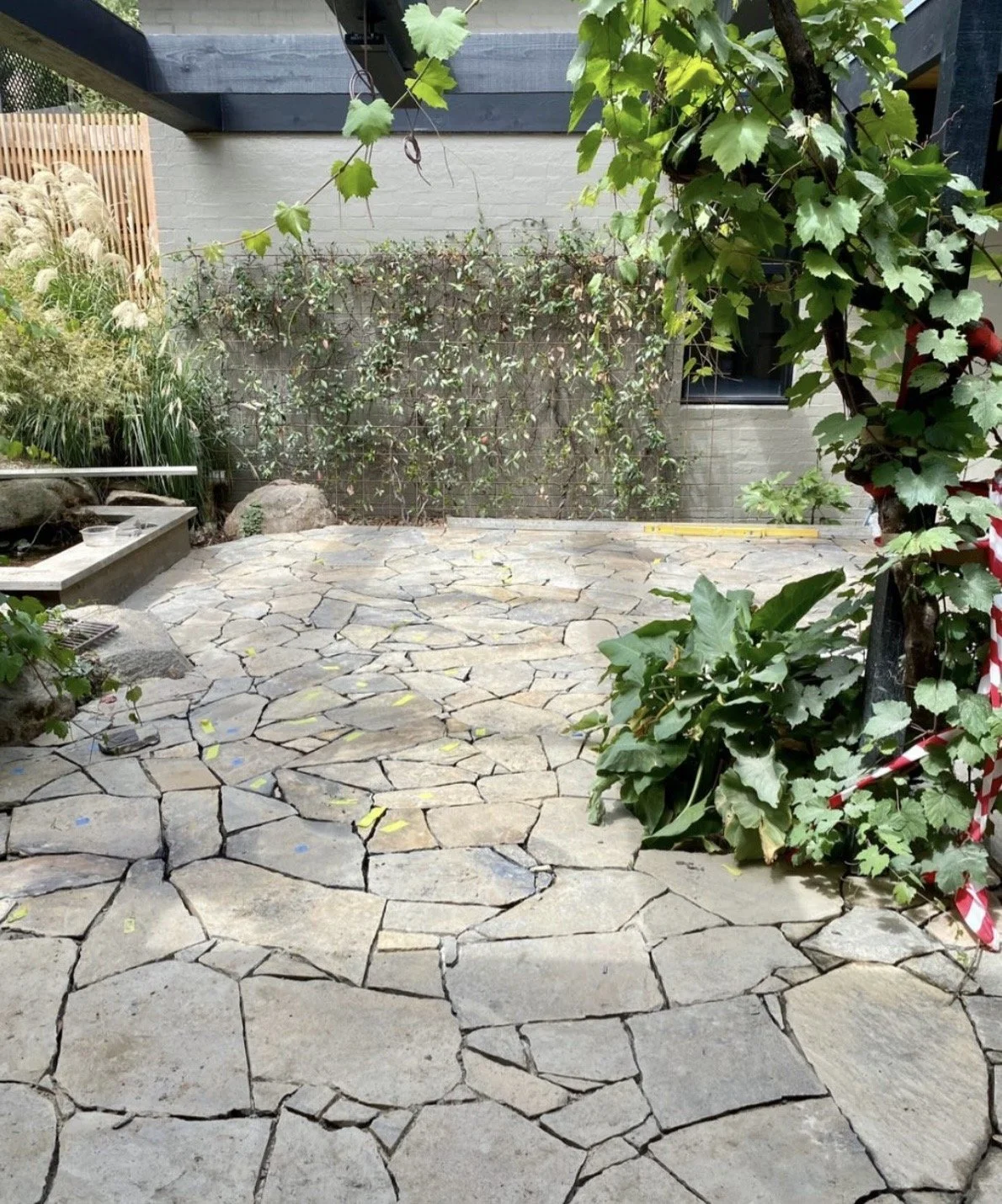
Slate
Splits naturally into layers, giving a textured surface in deep greys, greens, plums and rust tones. It has a rich, layered look that suits both rustic and contemporary spaces.
Best for:courtyards, feature areas, moodier palettes.
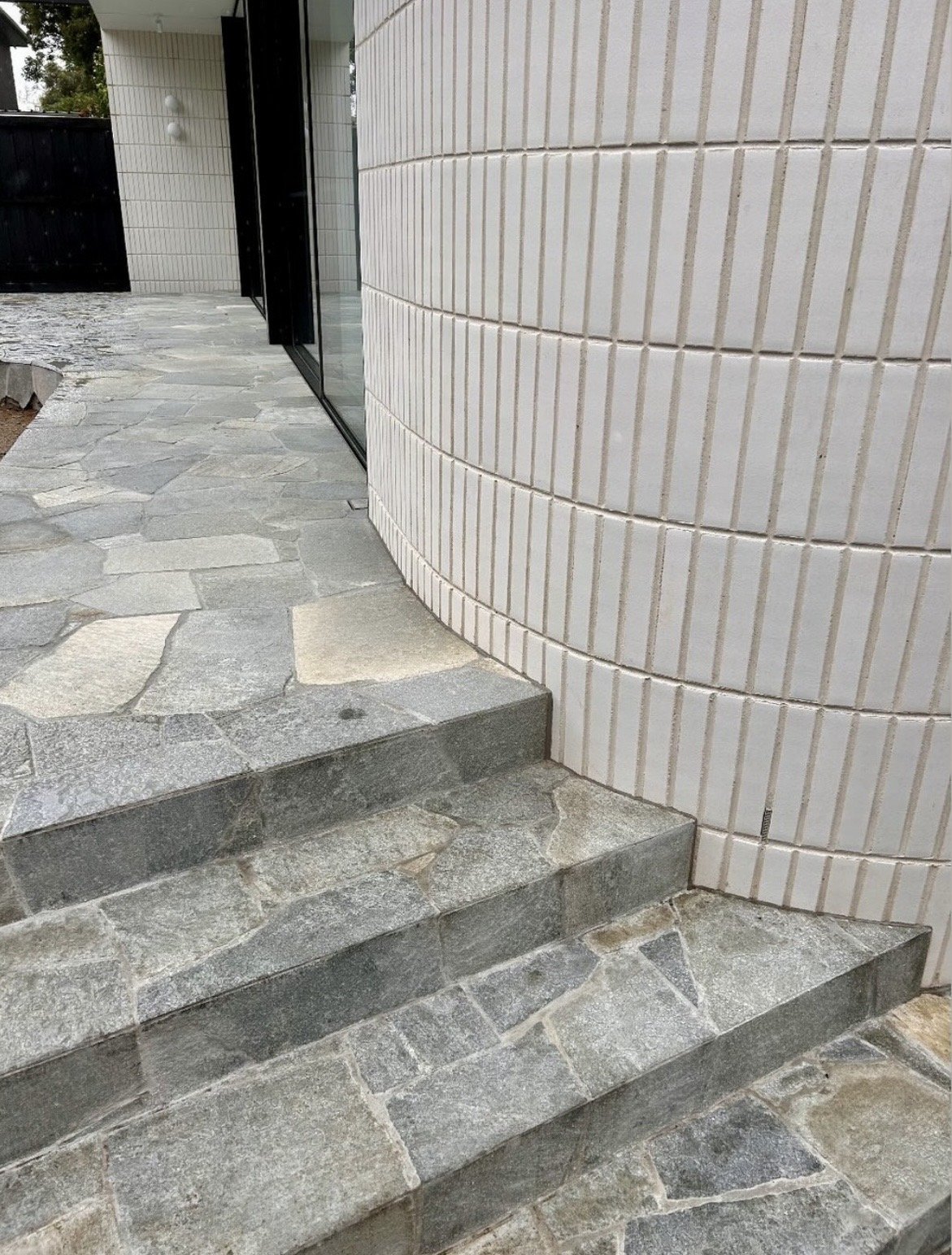
Mudstone
A fine-grained stone in muted, earthy tones. It’s understated and calm, a good choice when you want the garden to take centre stage.
Best for:garden paths, natural and native gardens.
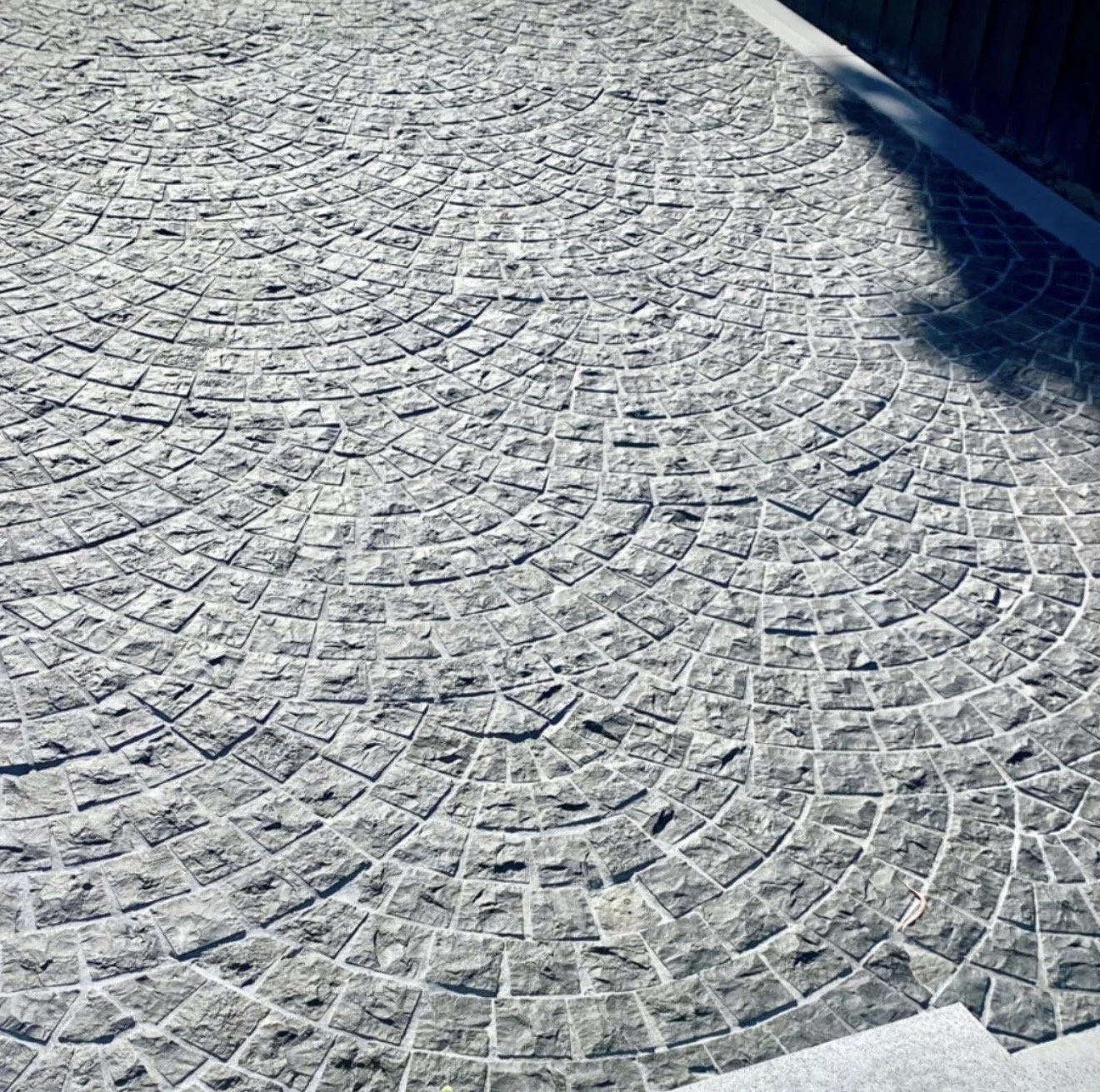
Cobblestone
Small, chunky stones with an old-world feel. Cobbles are great for borders, edging and accents, or as a full surface for a character-filled path.
Best for:edging, borders, accent bands, paths.
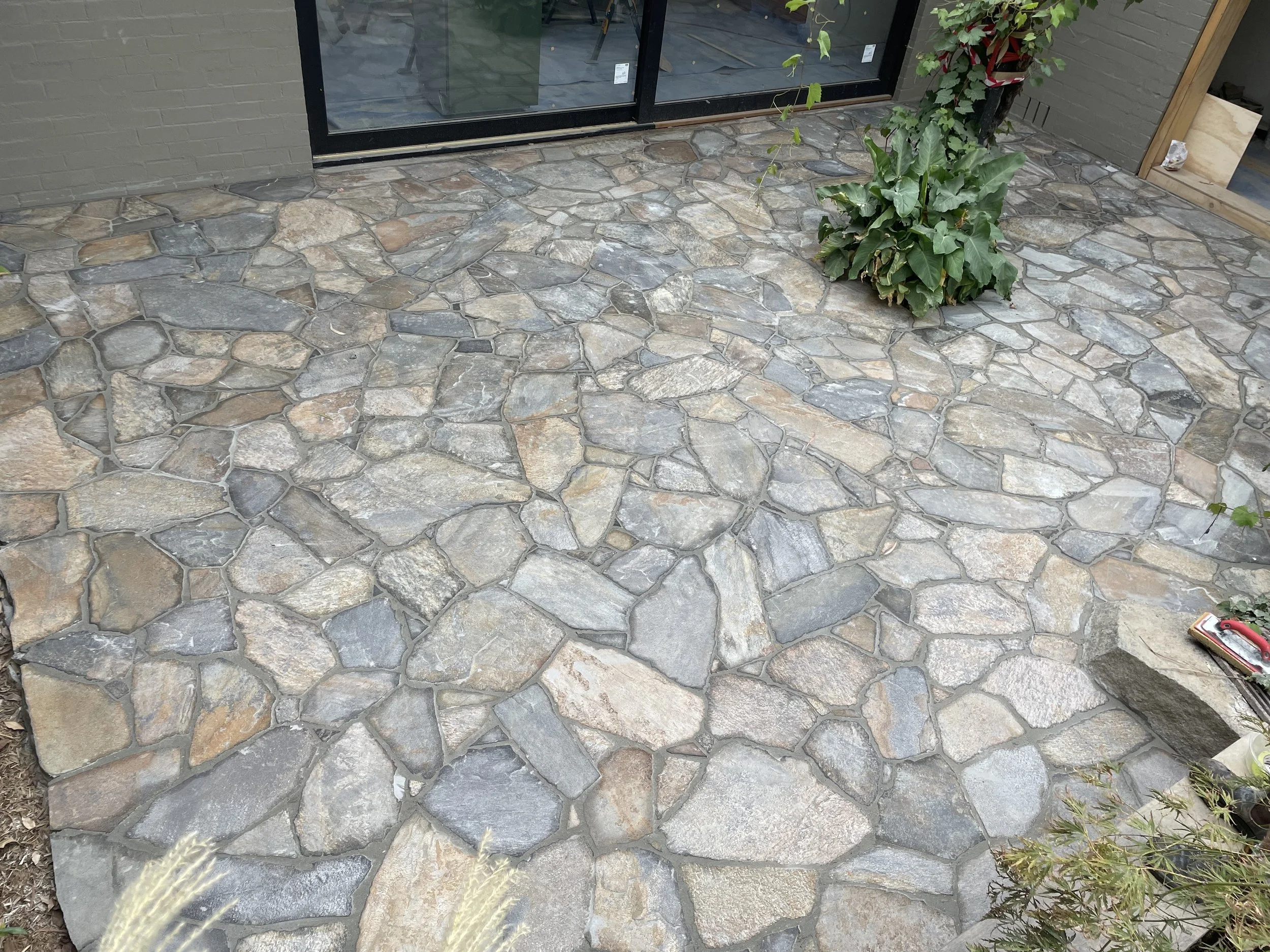
Mixing stones
Combining stones, like slate with sandstone, creates a more varied, natural look. It’s a great way to tie paving into existing stonework or the colours of your home.
What goes between the stones
The joints are where crazy paving gets its personality. Tight, solid joints give a clean, finished look. Wider joints filled with gravel or plants feel softer and more like a garden. Here are the main options.
Solid joints
Mortar. A firm, sealed joint that keeps weeds out and stones locked in place. The colour can be tinted to blend with the stone or contrast with it. Best for pool surrounds, outdoor dining areas and anywhere you want a smooth, easy-to-sweep surface.
Gravel and loose fill
Fine gravel or crushed stone. Small stones swept into the joints for a natural, textured finish. Water drains straight through, and the colour can match or complement the paving.
Decomposed granite. A fine, sandy gravel in warm earthy tones that packs down firmly. It gives a relaxed, rustic look.
Loose fills may need topping up now and then, especially after heavy rain.
Ground cover plants
Planted joints soften the paving and make it feel like part of the garden. They suit wider joints and areas with lighter foot traffic, like garden paths and stepping stones. Some that grow well between pavers:
| Plant | Suits | Good to know |
|---|---|---|
| Native violet | Shade to part sun, moist soil | An Australian native with small purple and white flowers |
| Dichondra (kidney weed) | Sun to part shade | Soft, round green leaves that form a low, dense mat |
| Dwarf mondo grass | Shade to part sun | Neat dark-green tufts that hold their shape |
| Native pratia | Part shade, moist soil | Tiny star-shaped flowers; handles light foot traffic |
| Creeping thyme | Full sun, well-drained soil | Fragrant when stepped on; prefers drier spots |
| Moss | Deep shade, damp soil | Lush and velvety; ideal for shady corners |
| Turf | Sun | Wide grass joints between large stones, for a lawn-and-stone look |
Native violet
Suits: Shade to part sun, moist soil
Good to know: An Australian native with small purple and white flowers
Dichondra (kidney weed)
Suits: Sun to part shade
Good to know: Soft, round green leaves that form a low, dense mat
Dwarf mondo grass
Suits: Shade to part sun
Good to know: Neat dark-green tufts that hold their shape
Native pratia
Suits: Part shade, moist soil
Good to know: Tiny star-shaped flowers; handles light foot traffic
Creeping thyme
Suits: Full sun, well-drained soil
Good to know: Fragrant when stepped on; prefers drier spots
Moss
Suits: Deep shade, damp soil
Good to know: Lush and velvety; ideal for shady corners
Turf
Suits: Sun
Good to know: Wide grass joints between large stones, for a lawn-and-stone look
We’ll help you choose plants that suit your site’s sun, soil and drainage.
Our preferred suppliers
We source our stone from suppliers we trust for quality and consistency. Browse their ranges for ideas, then talk to Henry about what will suit your space.
Eco Outdoor: a curated range of natural stone and architectural surfaces, founded in Melbourne.
Casa Della Casa: premium natural stone, tiles and pavers, with a warehouse in Brisbane.
Find your inspiration
Still deciding? Browse our Pinterest boards for stone combinations, joint styles and outdoor spaces we love.
New to crazy paving? Read our guide
Let’s find the right stone for your space
Tell us about your project and Henry will be in touch to talk through stone, joints and design.